Choosing a home mortgage isn't as basic as it sounds. That's due to the fact that there are lots of kinds of mortgages readily available and they're comprised of various componentsfrom the rate of interest to the length of the loan to the loan provider. Let's have a look at the benefits and drawbacks of the alternatives out there, so you can make a notified decision when it concerns your home mortgage.
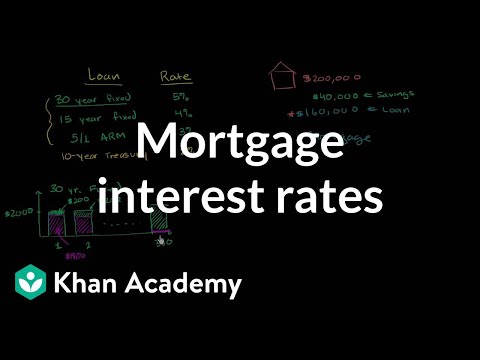
You can lock the rate, make it adjustable, or do a mix of both. For instance, if you get a 30-year home mortgage with a 5/1 variable-rate mortgage, your rate of interest will lock for five years, then adjust every year for the staying 25 years. The rates of interest remains the very same for the whole time it takes you to pay off the loan, so the size of your month-to-month payment stays the same, that makes it easier to prepare your budget.
ARMs use a lower rate of interest (and month-to-month payment) for the first few years. Sure, the preliminary low rate of interest is appealing, but in exchange for that lower rate up front, the danger of higher interest rates down the road is moved from the lending institution to you - how many mortgages to apply for. Many people find this type of mortgage enticing due to the fact that they can certify for a more costly house.
ARMs are one of the worst kinds of home loans out there. Keep more of your cash and choose a fixed-rate home loan rather. Your mortgage term refers to the length of your loan in years. It's a contract with your loan provider on the optimum quantity of time it'll take you to pay off the loan in complete.
A 15-year term keeps you on track to settle your home quickly, and usually has a lower rates of interest and expenses less overall interest compared to longer term loans. A 15-year term features a higher month-to-month payment compared to a 30-year or longer term. You'll have lower month-to-month payments with a 30-year term, compared to a 15-year.
You'll pay drastically lower monthly payments with a 50-year term, compared to much shorter term home mortgages. Your interest rate will be even greater than with a 30-year term, which suggests you'll pay the most in overall interest out of the terms listed here. Going with a 30-year (or longer) home mortgage feeds into the idea that you must base major monetary choices on just how much they'll cost you monthly.
If you desire to get ahead with your cash, you've got to take the total expense into factor to consider. (We'll compare expenses of various home loan alternatives a little later.) A 30-year home mortgage suggests 15 more years of financial obligation and countless dollars more in interest. No thanksgo for the 15-year term, pay less in interest, and.
Not known Details About How Do Reverse Mortgages Work In Utah
A non-traditional loanlike a subprime mortgagebreaks those standards. Unconventional loans also consist of government-insured programs (FHA, VA, USDA) that set their own underwriting standards. If the loan satisfies these agencies' standards, they agree to buy your house if the lender forecloses on the home, so the lending institution won't lose cash if you don't pay.
Standard loans aren't backed by the federal government, so lenders can charge a greater rates of interest or need a greater down payment (normally a minimum of 5%) compared to non-traditional loans. This kind of loan also needs you to pay private home loan insurance (PMI) if your down payment is less than 20% of the house's value.
The perceived pro is that lending institutions will offer you cash to purchase a house, even if you have bad credit and no cash. Subprime home mortgages were developed to assist individuals who experience setbackslike divorce, joblessness, and medical emergenciesget a house. Lenders know there's a huge threat in lending money to individuals who have no moneygo figure.
With Federal Housing Administration (FHA) loans, you can get a home mortgage with as little as a 3.5% deposit. You're required to pay a home loan insurance coverage premium (MIP)a cost similar to PMI, other than that you need to pay it for the life of the loan. The only method to remove MIP is if you have more than a 10% down paymentbut even then, you'll still have to pay it for a duration of 11 years! MIP can tack on an extra $100 a month per $100,000 obtained.
No thanks! With Department of Veterans Affairs (VA) loans, military veterans can buy a house with practically no deposit or home mortgage insurance. When you purchase a home with absolutely no money down and things change in the real estate market, you might end up owing more than the marketplace worth of your home.

This charge can vary anywhere from 1.25% to 3.3% of your loan, depending upon your military status, down payment amount, and whether it's your very first time funding a home with a VA loan. That's anywhere from $2,500 to $6,600 for a $200,000 loan. The United States Department of Farming (USDA) uses a loan program, handled by the Rural Real Estate Service (RHS), to people who reside in backwoods and reveal a monetary need based on a low or modest earnings.
You can't re-finance your loan to enhance your rate of interest, and the prepayment charges are horrendous. USDA subsidized loans are developed to get individuals who truly aren't ready to buy a house into one. If that's the only way you certify, then you can't pay for a house right now. Avoid the greater costs and surprise restrictions of unconventional loans.
Getting The How Many Mortgages In Dallas Metroplex 2016 To Work
Your mortgage will either be considered an adhering or non-conforming loan, depending upon just how much cash a loan provider will give you. A conforming loan is one that meets the basic underwriting standards (the approval procedure) of your specific home loan program. For example, standards for unconventional loans are determined by the FHA or VA, while government-sponsored companies like Fannie Mae or Freddie Mac supply the guidelines for conventional loans.
However they'll just purchase loans that are within the size limits developed by their guidelines. If your loan size surpasses their limits and does not adhere to their guidelinesas is the case with a jumbo loanit's considered a non-conforming loan. With adhering loans, you'll pay a lower rates of interest compared to non-conforming loans.
Jumbo loans exceed loan quantity limits set by Fannie Mae and Freddie Mac, which indicates you can get a higher priced home. They require outstanding credit and bigger down payments, and they have higher rates of interest than conforming loans. A conforming Fannie Mae loan will be your most inexpensive alternative here, if you put 20% to prevent PMI.
But there's a type of mortgage that does the opposite. With reverse home mortgages, senior property owners can supplement their minimal earnings by obtaining versus their home equity (the value of your home minus your existing loan balance). They'll receive tax-free, regular monthly payments or a swelling sum from the loan provider. With this kind of mortgage, you offer off your equitythe part you ownfor money. Currently the limitation in the majority of parts of the country is $417,000, but in specific designated high-price markets it can be as high as $938,250. Wondering if you're in a high-cost county? Here is the whole list of adhering loan limitations for high-cost counties in certain states. Loans that surpass this quantity are called jumbo loans.
Why would you want a jumbo loan? The easiest response is since it permits you to buy a higher-priced house, if you can manage it. However these loans have versatility that conforming loans don't have, such as not always needing home loan insurance when the down payment is less than 20 percent.
And they typically need higher deposits and exceptional credit, which can make them more tough to receive. You can check out more about these and other programs here. It's also a good concept to talk with a local lending institution to hear more about their choices get prepared by acquainting yourself with mortgage-related terms utilizing our handy glossary.
If you are considering purchasing a house, understanding the mortgage market and the many types of "items" is incredibly important. Considering that it is likely you will be paying long-term, you are going to wish to choose the very best home mortgage that satisfies your spending plan and needs. Not all home loans are the exact same and depending on your circumstance, you might require to check out several alternatives.
What Do I Do To Check In On Reverse Mortgages Can Be Fun For Anyone
There are numerous nuances and certifications connected to each of these, and you will need to talk with a home mortgage expert to find out which is ideal for you. This loan is not backed by the federal government. If you have good credit and can put down 3% then you can usually get approved for this loan backed by Freddie Mac or Fannie Mae.
They offer and buy nearly all traditional home mortgages nationwide. If you want to prevent requiring private home loan insurance (PMI) you're going to need to make a minimum of a 20% down payment. Nevertheless, some lending institutions do use these loans with a lower deposit and no requirement for PMI. This loan is specifically for veterans, service members, and military partners.
This means that 100% of the loan quantity can be financed. You also get a cap on closing expenses which is a major benefit. These loans are issued by private home mortgage loan providers and are constantly ensured by the U.S. Department of Veterans Affairs (VA). Bear in mind that this loan does require a funding fee to help offset taxpayer expenses.
You may also be able to choose out of paying financing costs if you are a veteran who did not receive active service pay or any retirement. FHA stands for Federal Real estate Administration. This loan https://caidendgia703.hatenablog.com/entry/2020/11/04/124318 is terrific for first-time home purchasers or those who have actually not saved enough for a large deposit.
Down payments are able this low since of the reality that Federal Real estate Administration loans are government-backed. The advantages of this loan consist of being able to pay your home loan at any time without prepayment charges, numerous term alternatives with repaired rates, and the choice for a five-year adjustable rate mortgage.
This makes them non-conforming loans. In simpler terms, when a loan quantity reaches a specific point, Jumbo Mortgages and Super Jumbo Loans can provide high-end financing that a traditional loan can not. So, if you need to finance a high-end property that is too costly for a traditional loan, this is an excellent option for you.
This mortgage typically provides rate of interest lower than a fixed rate mortgage. Adjustable ways that if total rates of interest rise, so will your regular monthly payment. Vice versa, if rates fall, your payment will reduce too. This loan is terrific if you are struggling financially and live in a backwoods (what do i need to know about mortgages and rates).
Facts About Who Is Specialty Services For Home Mortgages ? Revealed
With this loan, the government can fund 100 percent of the house expense. This only opts for USDA qualified houses. Benefits include no deposit required and better interest rates. While you might be thinking that a person of these loan alternatives sounds like the perfect suitable for your situation, depending on the loan type, there are numerous credentials requirements you will need to browse.
In many cases, your individual preference might be another aspect that could impact your loan choice. After all, you have choices to make on how you desire to structure your mortgage and pay it off. From terms and loan length, to deposits and loan size, these elements will impact your alternatives as it connects to your home mortgage.
If you desire to buy a home and you don't have sufficient cash to pay for the whole rate of that house as the down payment, you're most likely going to need to get a home loan. Easier stated than done, nevertheless. There are a number of different home mortgages you could certify for to spend for your house, each with different advantages and disadvantages.
Among the most typical differences between home loans is the kind of rate of interest they have. Lenders earn a profit by providing debtors money and after that asking for it back with interest. The quantity of interest is generally identified by a percentage of the money borrowed. For example, if you get a home loan for $300,000 with a 4% rates of interest, and you pay the minimum payments every month, at the end of the year you'll have paid 12,000.
That involves paying on your premium versus paying on your interest, which you can discover about here.) With both kinds of mortgages you have to get home insurance, and it's a good idea to research home warranty plans and get the additional protection on your home. There are two kinds of rate of interest for mortgages, adjustable and fixed.
Then, the rate of interest adjusts from year to year over the life of the loan. Most of these loans consist of a cap (it can't go above 10%, for instance) and does not require mortgage insurance coverage. This kind of home loan is attractive since it reveals a lower rates of interest at the start of the loan, which might help individuals who can't pay as much or are moving quickly.
This kind of home loan requires house insurance coverage plans and Landmark also recommends home warranty strategies. A set rate mortgage has an interest rate that remains the same throughout the whole time of the mortgage. These kinds of home loans can last in between 10 and 40 years. The longer the length of the loan, the smaller sized the regular monthly payments will be, however the more you'll wind up paying on interest.